


A three-row SUV has to earn its spot in the driveway. It needs to handle school drop-off, groceries, ball practice, weekend trips, and the occasional load of home-project supplies without making every errand feel like a compromise. This GMC Acadia review looks at why the current-generation Acadia is a strong option for North Alabama families who want real room, confident power, and a more substantial feel than a typical midsize crossover.
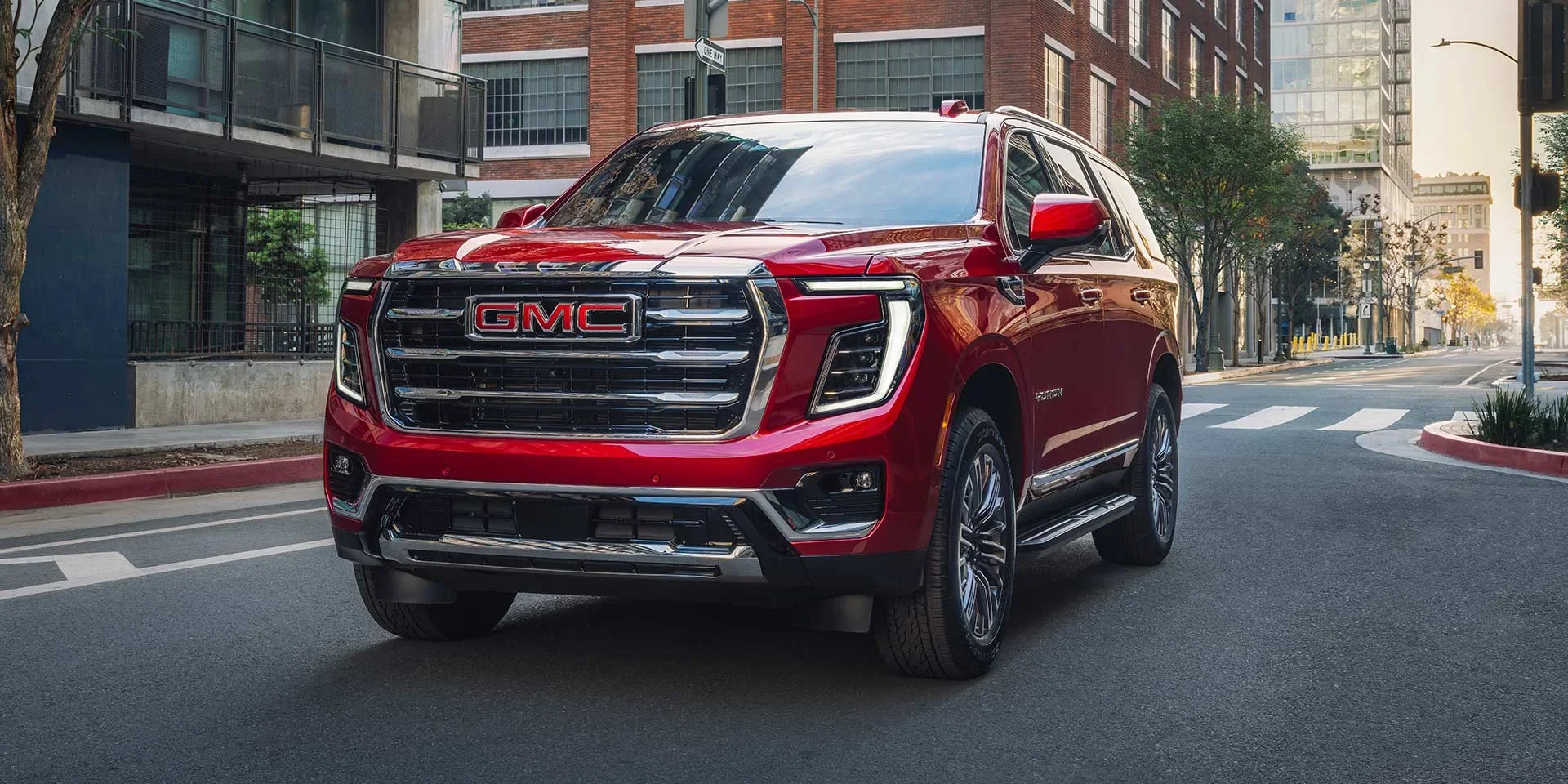
The Acadia sits between the smaller Terrain and the full-size Yukon in the GMC SUV lineup. That placement matters. It gives families more usable passenger and cargo space than a compact SUV without asking them to manage the size of a Yukon around downtown Huntsville parking lots or crowded school pickup lines.
GMC Acadia Review: The Big Changes That Matter
The current GMC Acadia is larger than the model it replaced, and that is the most meaningful part of the story. GMC stretched the vehicle in the places families notice: cabin space, third-row comfort, and cargo capacity. The result is an SUV that feels prepared for seven or eight passengers, depending on seating configuration, rather than one that treats the third row as an emergency-only seat.
Behind the third row, the Acadia offers useful room for backpacks, grocery bags, or a few pieces of sports gear. Fold that row down, and the space becomes far more flexible for larger runs to the hardware store, luggage for a trip, or bulky strollers. With the rear seats folded, maximum cargo volume reaches up to 97.5 cubic feet. That is a meaningful advantage for buyers who have outgrown a two-row vehicle but are not ready for a full-size SUV.
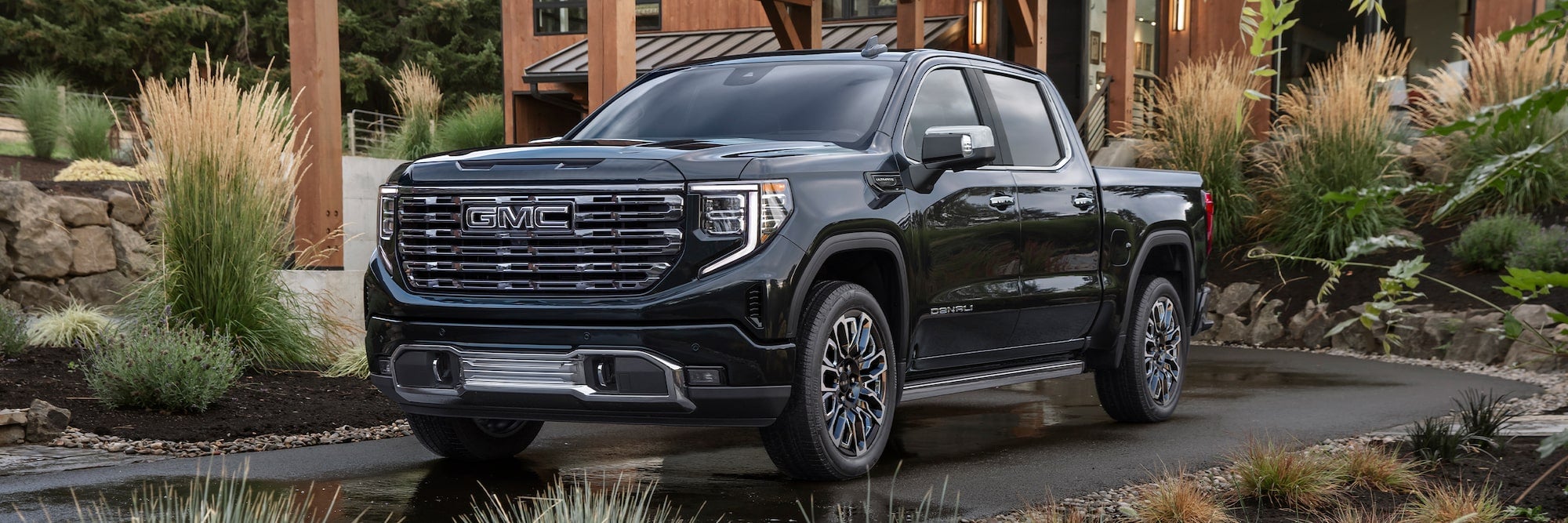
The Acadia also feels intentionally GMC. Its squared-off styling, tall grille, and upright profile give it more road presence than softer-looking crossovers. That may not be every buyer's preference, but for drivers who like the confident appearance of a Sierra or Yukon, the Acadia carries that family resemblance well.
Power for More Than the School Run
Every current-generation Acadia uses a 2.5-liter turbocharged engine paired with an eight-speed automatic transmission. It produces 328 horsepower and 326 lb-ft of torque, which is considerably more power than many shoppers expect from a three-row crossover.
On the road, that power pays off when merging onto Interstate 565, passing slower traffic on Highway 72, or loading the SUV with people and gear. The Acadia does not need to be pushed hard to get moving, and that relaxed strength makes daily driving more comfortable. Available all-wheel drive can add reassurance for rainy Alabama roads, gravel driveways, or a family trip that takes you beyond the pavement.
Properly equipped, the Acadia can tow up to 5,000 pounds. That opens the door to a small camper, fishing boat, utility trailer, or a pair of ATVs. Buyers who tow regularly should still review the specific vehicle's equipment carefully. Tow ratings depend on configuration, and a trailer's loaded weight matters more than its empty weight.
There is a trade-off to acknowledge. A larger, more powerful three-row SUV will not have the same fuel use as a small crossover. If your driving is mostly one or two people commuting around Madison or Huntsville, the smaller GMC Terrain or Buick Envision may be the more efficient fit. But if you routinely use three rows or want towing capability, the Acadia's added size and power are easy to appreciate.
Is the Third Row Actually Useful?
For many families, this is the question that decides the purchase. The answer is yes, with a little context. The Acadia's third row is more accommodating than the tight rear seats found in many midsize SUVs. Children, teenagers, and average-size adults can use it for regular trips more comfortably than they could in a smaller three-row model.
That does not mean it replaces the expansive third row of a GMC Yukon. If you often carry adults in all three rows, take long road trips with seven people, or need generous cargo room even when every seat is occupied, the Yukon may be worth considering. It is the better tool for the biggest families and the heaviest towing needs.
For households that need the third row a few times each week - carpooling, grandparents visiting, friends joining a game-day drive - the Acadia strikes a practical balance. It is easier to live with than a full-size SUV while offering much more flexibility than a two-row crossover.
Cabin Comfort and Technology
The Acadia's cabin is built around a large, vertical touchscreen that puts navigation, audio, camera views, and vehicle settings within easy reach. Available Google built-in features can make route planning and voice commands more convenient for drivers who prefer connected technology. Wireless phone integration and available charging options help keep the front seats from turning into a tangle of cords.
The layout is straightforward, which matters when someone else is asking where the snacks are while you are trying to find your next turn. Storage spaces throughout the cabin give everyday items a proper home, and higher trims add more upscale materials and comfort-focused features.
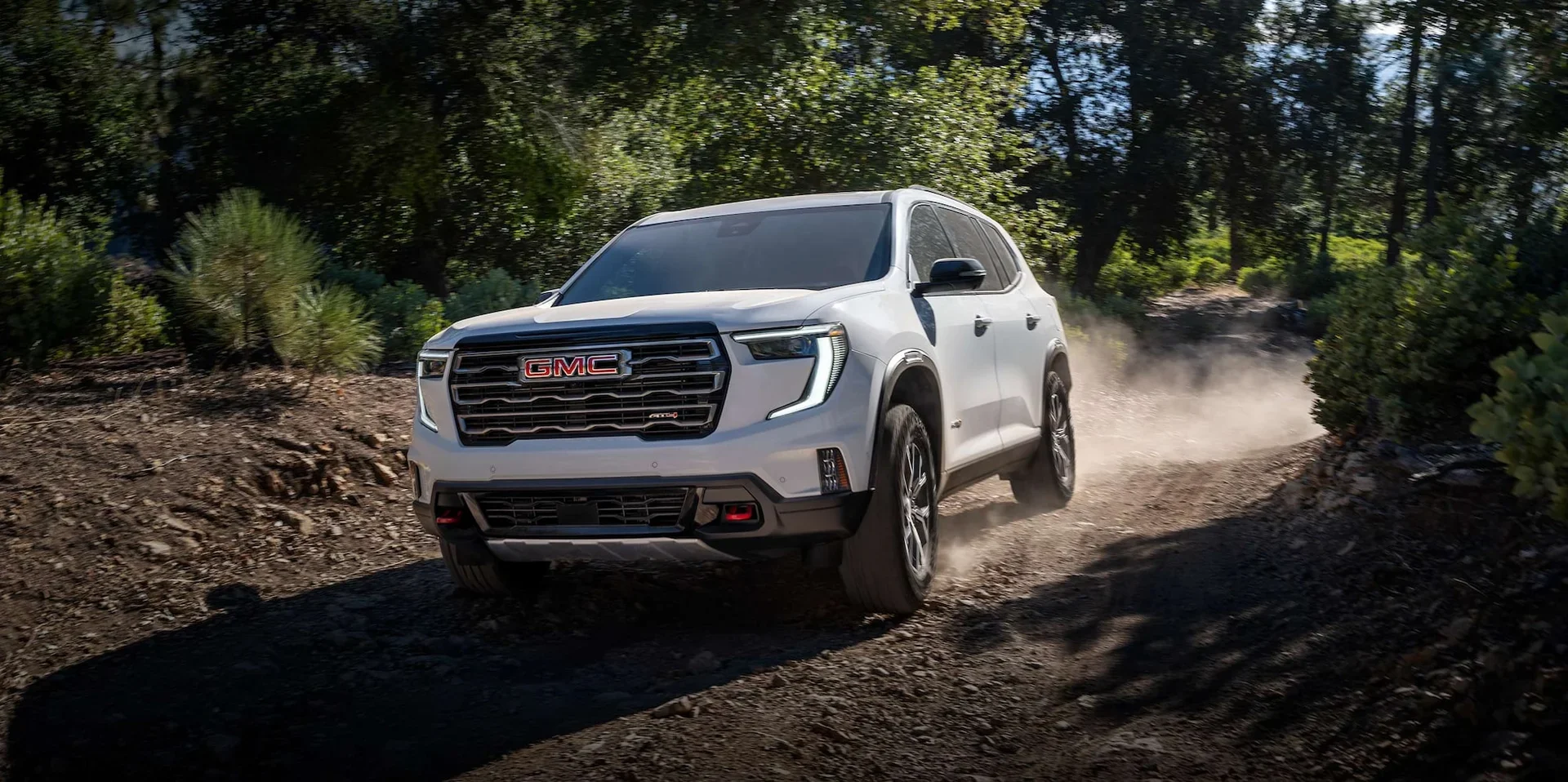
Available features vary by trim and model year, but shoppers can generally expect choices that range from a well-equipped family SUV to a more polished, premium-feeling Acadia. The off-road-inspired AT4 approach is a natural fit for buyers who like a tougher look and may use unpaved roads. Denali models lean more toward refined styling and added convenience. The best choice depends less on a badge and more on how you will use the vehicle every week.
Safety and Driver Assistance
A family SUV should help reduce the strain of a busy drive, not add to it. The Acadia offers a wide set of standard and available driver-assistance features, including automatic emergency braking, lane-related alerts and assistance, forward collision warning, and parking aids. Available camera technology can be especially helpful when backing out of a crowded parking space or lining up a trailer.
Some configurations may offer advanced hands-free driving technology on compatible roads. It is a feature worth discussing during a test drive if highway travel is a regular part of your routine. Still, driver-assistance systems are there to support an attentive driver, not replace one. The most useful safety feature is often the one you understand well enough to use confidently.
Acadia vs. Buick Enclave: Which Family SUV Fits?
The GMC Acadia and Buick Enclave are both compelling three-row choices, but they appeal to different priorities. The Acadia feels more truck-inspired, with an off-road-focused AT4 trim and a bolder exterior. It is a natural match for families who haul gear, tow occasionally, or simply prefer GMC's more rugged character.
The Buick Enclave focuses more heavily on a quiet, refined ride and a premium crossover atmosphere. If your priority is a softer, more luxurious commute with three-row versatility, the Enclave deserves a close look. If you want a family SUV that feels ready for a trailer, a campground, or a muddy ball field, the Acadia may be the better fit.
Neither choice is automatically better. A test drive with the people, car seats, and gear you actually use can settle questions that a spec sheet cannot.
Who Should Choose the GMC Acadia?
The Acadia makes the most sense for shoppers who need more than a compact SUV but do not need a full-size vehicle every day. It works particularly well for growing families, active households, and drivers who want a comfortable road-trip vehicle with legitimate towing potential.
It may be less ideal for someone who rarely carries more than four people and places fuel economy above all else. In that case, a Terrain, Buick Envision, or even a quality used two-row SUV could make more sense. On the other hand, families shopping used Acadia models should pay close attention to model year, service history, seating layout, and whether the vehicle has the towing or all-wheel-drive equipment they need.
The right SUV should make your routine easier before it impresses anyone in a parking lot. If the GMC Acadia sounds like it could fit your family, compare current new and used inventory, bring your everyday questions to Bentley Buick GMC, and take a test drive that includes the people who will actually ride in it.
Frequently Asked Questions
Is all-wheel drive on the GMC Acadia worth it for North Alabama weather?
It is worth considering if you deal with gravel driveways, hilly roads, or travel often in heavy rain. All-wheel drive also helps during the occasional ice event that reaches Madison County. If you mostly drive paved roads around Huntsville, front-wheel drive may be enough. Think about your toughest regular drive, not your easiest one.
How do third row passengers stay comfortable in an Acadia during Alabama summers?
Check how the climate system reaches the back of the cabin on the trim you are considering, including rear controls and vents. Tinted glass and sunshades can also help. During your test drive, sit in the third row with the air running on a warm day so you know how it feels before summer road trips.
What should I check before towing a boat with a GMC Acadia?
Confirm that the Acadia you are considering has the trailering equipment needed, then compare its rating with the loaded weight of your boat and trailer. Remember that passengers and gear count too. Check trailer lights, tire pressure, and the hitch before heading to the lake, and use a ramp with good traction.
Is a used GMC Acadia a good alternative to a new one?
It can be, but know which generation you are looking at. The current Acadia is larger than the model it replaced, so third row room and cargo space differ. Review service history, seating layout, and towing or all-wheel drive equipment. Comparing a used Acadia with a new one in person makes those differences easy to see.