


Blog

GMC Yukon versus Chevrolet Tahoe: Which Fits?

GMC Yukon versus Chevrolet Tahoe: Which Fits?

A full-size SUV has to earn its space in the driveway. It may be taking kids to practice in Huntsville, carrying grandparents to Sunday lunch, towing a boat toward the lake, or loading up for a long Alabama road trip. In the GMC Yukon versus Chevrolet Tahoe decision, the practical differences are smaller than many shoppers expect, but the personality of each vehicle can make one feel like the better fit.

The Yukon and Tahoe share much of their mechanical foundation, including their body-on-frame construction, available four-wheel drive, and three rows of seating. That means this is not a simple case of one SUV being better than the other. The better question is whether you prefer the Yukon’s more premium, GMC-focused trim lineup or the Tahoe’s broader range of familiar Chevrolet personalities.

GMC Yukon Versus Chevrolet Tahoe at a Glance

Both SUVs offer the capability that draws families to a full-size vehicle in the first place. Depending on configuration, each can be equipped with a gas V8 or an available Duramax turbo-diesel engine, paired with a 10-speed automatic transmission. Properly equipped models can tow substantial loads, with maximum towing ratings reaching up to 8,400 pounds.

They also offer comparable passenger room and cargo flexibility. Behind the third row, each has about 25.5 cubic feet of cargo space. Fold the rear seats, and there is enough room for luggage, sports gear, home-improvement supplies, or a serious grocery run without playing a game of trunk Tetris.

Because their basics are so similar, compare the exact trim, drivetrain, seating layout, and equipment you want. A two-wheel-drive Tahoe LS and a four-wheel-drive Yukon Denali are not direct substitutes, even though they share a platform.

Where the GMC Yukon Stands Apart

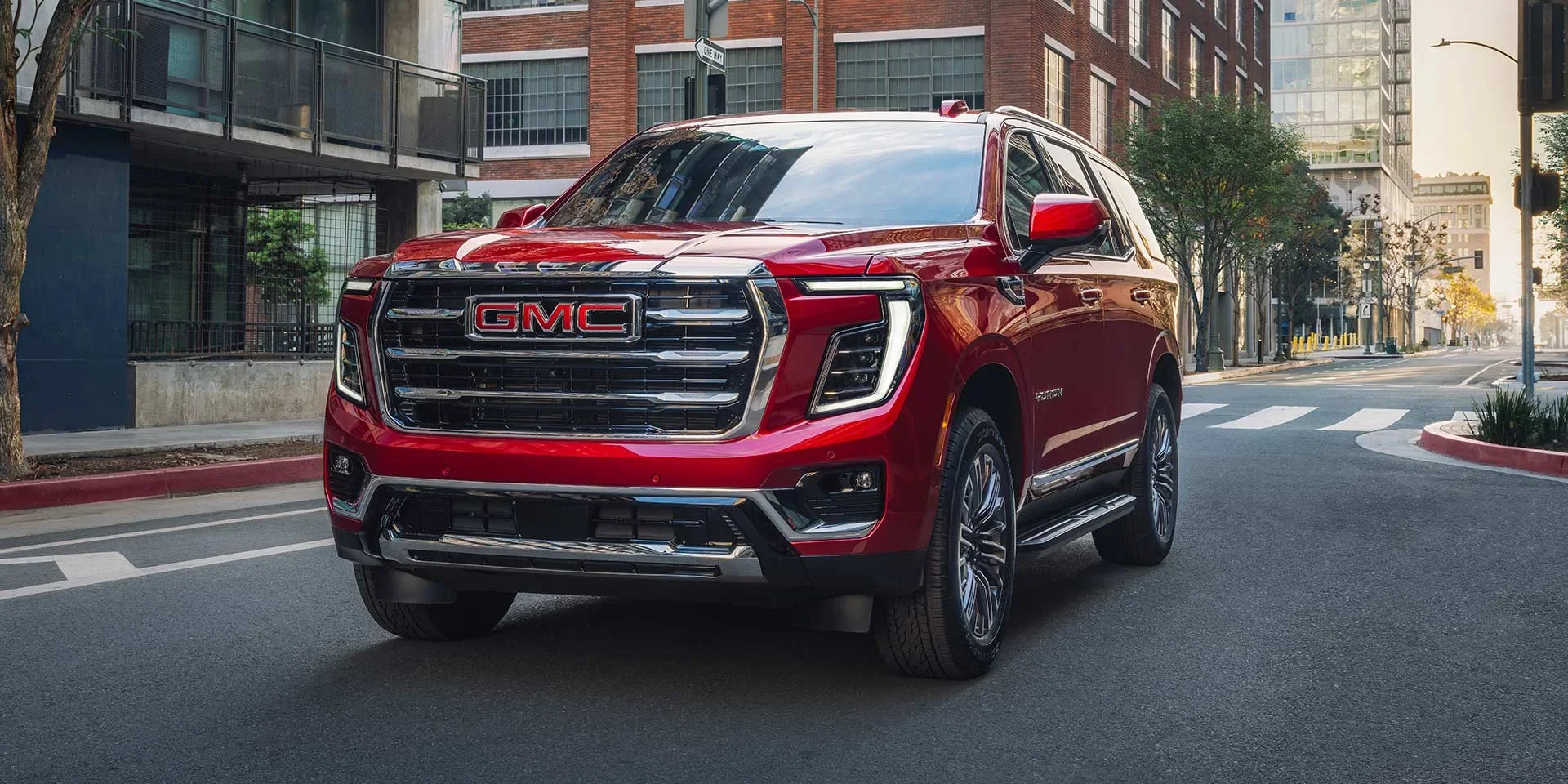
The Yukon generally leans more upscale from the start. Its styling is square-jawed and confident, with a grille, lighting signature, and cabin design that feel distinctly GMC. For shoppers who want a large SUV that is functional Monday through Friday but still feels special on a night out, that presentation matters.

Denali Brings a More Luxurious Direction

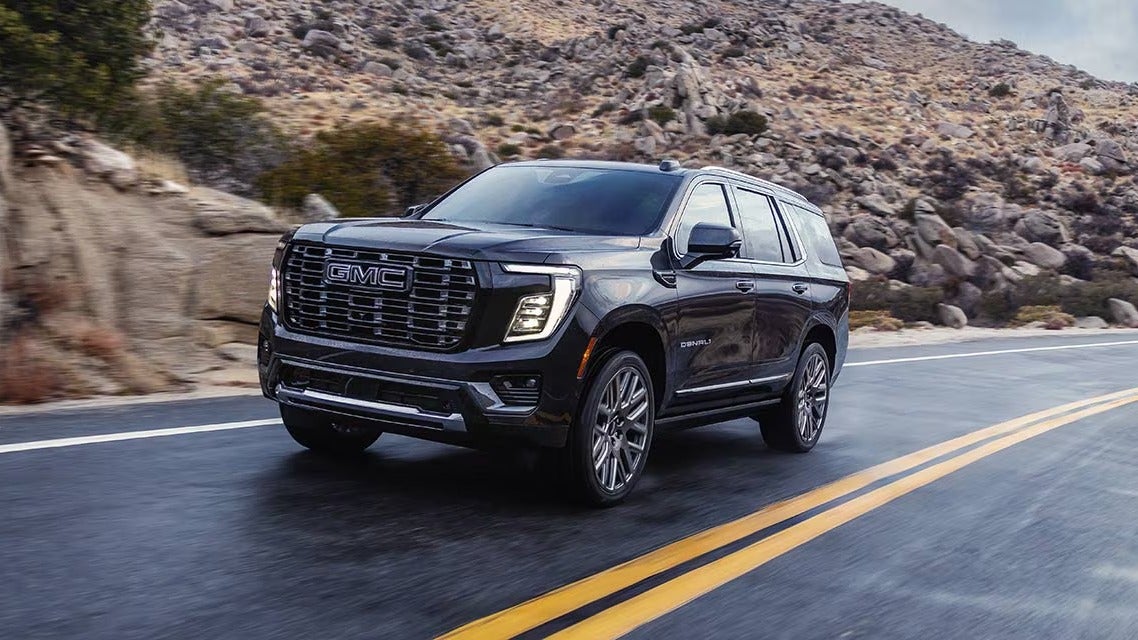
The Yukon Denali and Denali Ultimate trims are the clearest difference-makers. They bring more refined cabin materials, distinctive exterior details, advanced available technology, and a stronger luxury feel than most mainstream full-size SUV trims. Available features such as premium audio, massaging front seats, and a high-end interior finish can make long drives more comfortable.

The Denali name is not just an appearance package. It is aimed at buyers who want full-size utility without giving up the details they appreciate in a premium vehicle. If your family vehicle also doubles as your client-meeting vehicle or weekend travel vehicle, the Yukon’s upper trims deserve a close look.

AT4 Is Built for the Less-Paved Route

The Yukon AT4 is the right conversation for shoppers who regularly head beyond the pavement. It brings an off-road-focused look and equipment, including four-wheel drive and rugged capability features. It is not a substitute for a dedicated trail rig, but it is a smart choice for rough campsites, hunting land, gravel roads, and trips where ground clearance and traction matter.

For many North Alabama drivers, that is a practical advantage rather than a bragging point. A vehicle that feels composed on the Parkway but ready for a muddy field or uneven boat ramp can make ownership easier.

Where the Chevrolet Tahoe Makes Its Case

The Tahoe is every bit as capable of handling family duty, towing, and long-distance travel. Its advantage is choice. Chevrolet offers a wider variety of trim personalities, allowing shoppers to move from a straightforward, value-minded SUV to a sporty-looking model, an off-road-oriented option, or a well-appointed premium version.

More Ways to Match Your Style

The Tahoe lineup includes trims such as LS, LT, RST, Z71, Premier, and High Country. The RST appeals to drivers who want a darker, sportier road presence. The Z71 gives the Tahoe an off-road-ready attitude. At the other end, Premier and High Country models add more comfort, convenience, and upscale touches.

That range can be helpful if you already know exactly what you want. A Tahoe can be equipped as a straightforward family hauler, a towing vehicle with modern conveniences, or a polished road-trip SUV. The key is being disciplined about must-have features instead of paying attention only to the badge on the grille.

Familiar, Straightforward Full-Size Utility

Some buyers simply prefer Chevrolet’s more familiar design language and trim naming. The Tahoe feels traditional in the best sense: roomy, capable, and easy to understand. If you are trading out of another Chevrolet or want the widest selection of styling and equipment combinations, it may feel immediately comfortable.

Power, Towing, and Driving Feel

Neither the Yukon nor the Tahoe should be chosen based on horsepower alone. The available 5.3-liter V8 is a sensible fit for many drivers who need dependable daily power and occasional towing. The available 6.2-liter V8 adds stronger performance for those who frequently pull heavier trailers or appreciate quicker acceleration. The available Duramax turbo-diesel is worth considering for drivers who cover a lot of highway miles or value low-end torque when towing.

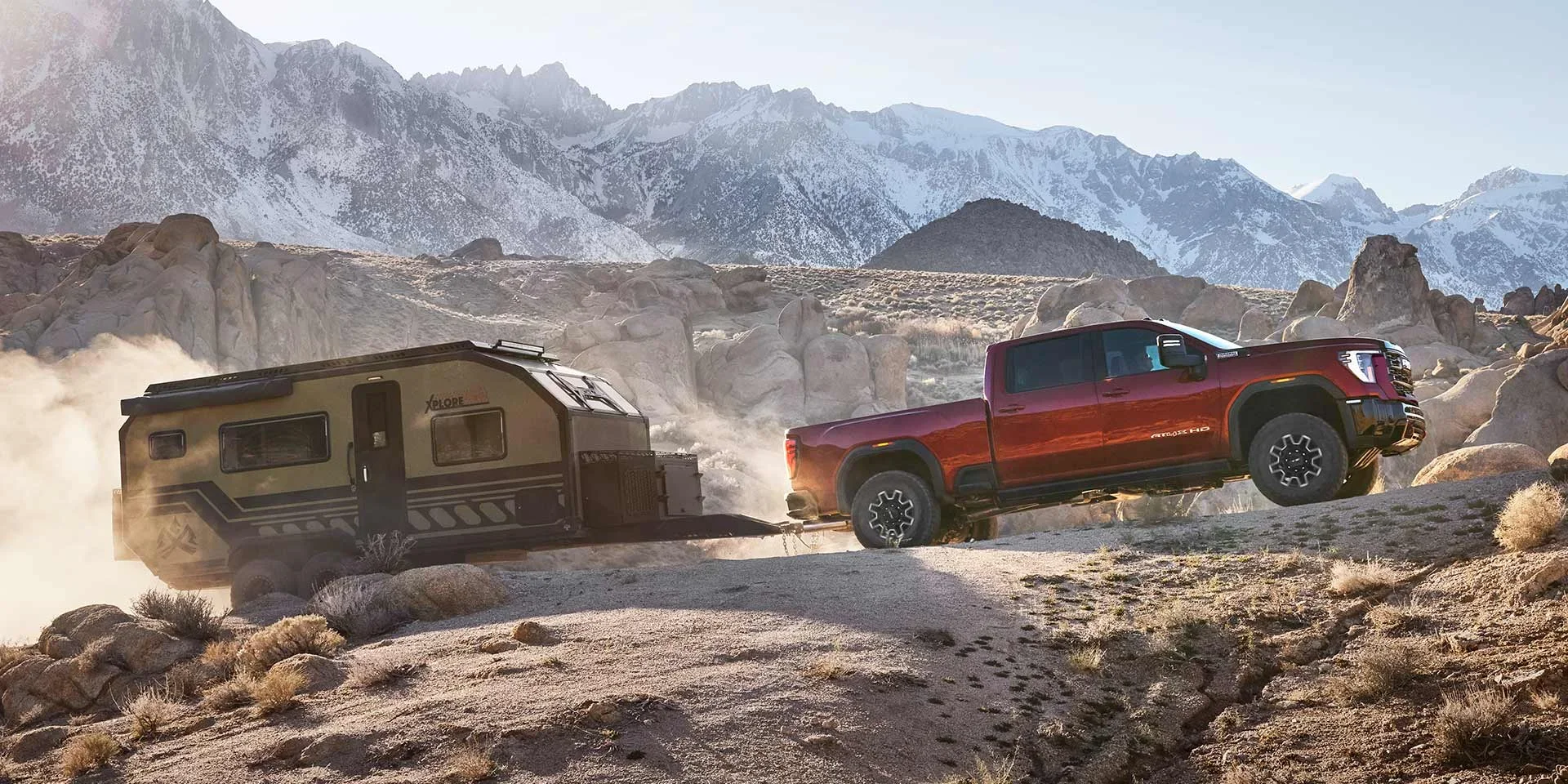
Towing ratings depend on the engine, drivetrain, axle ratio, towing package, passenger load, and trailer setup. If you pull a camper, enclosed trailer, or boat, bring the real numbers to the conversation: loaded trailer weight, tongue weight, passenger count, and the gear you carry. A vehicle may have an impressive maximum rating and still need to be matched carefully to your specific trailer.

On the road, the differences often come down to trim and suspension. Both can be calm, comfortable highway companions, especially in higher trims with available adaptive suspension systems. The Yukon tends to feel more deliberately premium in its upper configurations, while the Tahoe gives buyers more routes to the ride quality and look they prefer.

Seating, Cargo, and Family Details

Both models can be configured for large families, with seating for up to eight in the current Yukon and up to nine in select Tahoe layouts. Available second-row captain’s chairs make access to the third row easier and give passengers more individual space, while a second-row bench may be the better answer for shoppers who need maximum seating capacity.

Before deciding, sit in the third row yourself. Check how easily child seats fit in the second row, whether older kids can reach their seating position without help, and how much cargo space remains when all rows are occupied. A spec sheet cannot tell you whether the rear liftgate opening works for your cooler, stroller, baseball bag, or folding chairs.

Technology availability also varies by trim. Both vehicles can offer large displays, smartphone connectivity, driver-assistance features, trailering technology, and rear-seat entertainment options. Instead of assuming a feature is standard, confirm it on the exact vehicle you are considering. Model-year changes and package availability can affect the equipment list.

Which One Should You Choose?

Choose the GMC Yukon if you want your full-size SUV to feel more premium, particularly in Denali or Denali Ultimate form. It is also the natural choice if the AT4’s off-road-minded capability suits the way you spend weekends. The Yukon delivers serious family and towing utility while carrying a more elevated GMC identity.

Choose the Chevrolet Tahoe if you want more trim paths and a classic Chevrolet take on the full-size SUV. It can be the better match for shoppers who want a particular combination of value, sportier styling, off-road appearance, or premium comfort within one broad lineup.

If both are on your list, do not decide from photos alone. Sit in the driver’s seat, fold the seats, look over the trailering equipment, and take each one on a real test drive. At Bentley Buick GMC, we are happy to help you compare the Yukon configurations that fit your family, your trailer, and the roads you travel most. Browse available new or used vehicles, talk through financing choices, and choose the SUV that will still feel right after the new-car excitement wears off.

Frequently Asked Questions

Is a Yukon Denali a good fit for long North Alabama road trips?

For many families, yes. Denali trims focus on refined materials, comfortable seating, and available technology that can make long drives to the Gulf or the mountains more relaxing. Whether it is worth it depends on how much time you spend behind the wheel. Drive a Denali and a lower Yukon trim back to back to compare.

Does the Yukon AT4 make sense for lake and hunting trips in North Alabama?

The AT4 is designed for drivers who regularly use gravel roads, hunting land, campsites, and boat ramps. Its four-wheel drive and off-road focused equipment add confidence on those surfaces. If your weekends stay on pavement, another Yukon trim may give you a smoother ride for daily driving around Huntsville.

What should I bring when comparing Yukon configurations at Bentley Buick GMC?

Bring the car seats, coolers, sports gear, or strollers you carry most often, plus details about any trailer you tow, including its loaded weight. If you plan to park in a garage, bring its measurements. Those items help the team match a Yukon seating layout, drivetrain, and trailering setup to your real routine.

Is four-wheel drive necessary on a Yukon in Madison County?

It is not required for most paved driving, but it helps during heavy storms, on the occasional icy morning, on gravel roads, and on slick boat ramps. Families who tow or head off the pavement often choose four-wheel drive. Drivers who stay on city streets and I-565 may find two-wheel drive fits their needs.
Recommended Posts

GMC Terrain vs. Acadia: Which GMC SUV Is Right for You?

GMC Terrain vs. Acadia: Comparing GMC's SUV Lineup Shopping for a GMC SUV and stuck between two sizes? The GMC Terrain vs. Acadia decision comes down to how many people you carry, how much you haul, and how you spend your weekends. The Terrain is the smallest SUV in GMC's lineup, built for easy parking and everyday driving. The Acadia is a three-row midsize SUV with room for up to eight passengers and real towing muscle. At Bentley Buick GMC, we help Huntsville drivers compare both side by side every week. Here's how they stack up so you can pick the right fit. Size and Seating: Compact vs. Midsize The biggest difference between these two SUVs is size. The Terrain is a two-row compact SUV that seats five. The Acadia is a three-row midsize SUV that seats up to eight in the Elevation trim, while other trims use second-row captain's chairs for seven passengers. Cargo Space Terrain: about 30 cubic feet behind the second row and about 63 cubic feet with the rear seats folded. Acadia: 23.0 cubic feet behind the third row, 57.3 cubic feet behind the second row, and 97.5 cubic feet behind the first row. That means the Acadia holds nearly as much behind its third row as the Terrain does behind its second. With every seat folded, it offers about 50% more room. If your week includes carpools, sports gear, or grandparents riding along, that extra row matters. If you mostly drive solo or with one or two passengers, the Terrain's smaller footprint is easier to park in tight garages and busy lots. You can see both SUVs side by side in our new GMC inventory. Power, Performance, and Towing Under the hood, these SUVs are built for different jobs. Terrain: a 1.5L turbocharged four-cylinder with 175 horsepower and 203 lb-ft of torque. All-wheel-drive models can tow up to 1,500 pounds when properly equipped. Acadia: a 2.5L turbocharged four-cylinder with 328 horsepower and 326 lb-ft of torque, paired with an eight-speed automatic. A trailering package is standard, so every Acadia can tow up to 5,000 pounds. The Terrain's engine is tuned for commuting and around-town errands. It handles highway merges well, but it isn't meant for heavy loads. The Acadia has nearly double the horsepower and more than three times the towing capacity. That's enough for a small boat, a pair of personal watercraft, or a pop-up camper headed to the lake. Want to know how the Acadia holds up over the years? Read our guide to GMC Acadia reliability. Technology and Safety Features Both SUVs share GMC's modern cabin design, so choosing the smaller one doesn't mean giving up much tech. 15-inch center touchscreen: standard on both. The Acadia's portrait-style screen includes Google built-in for voice commands, maps, and apps. 11-inch driver information display: keeps speed, navigation, and vehicle info right in your line of sight. Standard safety tech: both come with a long list of standard driver-assistance features, including automatic emergency braking. Super Cruise: hands-free driver assistance is available on select Acadia trims for compatible highways. If you spend a lot of time on I-565 or I-65, features like Super Cruise and the Acadia's larger cabin can make long drives more relaxing. For quick trips across town, the Terrain gives you the same big-screen experience in a smaller, easier-to-drive package. Trim Levels: Elevation, AT4, and Denali Both SUVs come in the same three GMC trims, which makes comparing them simple. Elevation The starting point, with bold styling and core tech. On the Acadia, Elevation is the trim that offers eight-passenger seating. AT4 Built for rougher roads. The Terrain AT4 adds a lifted ride height, all-terrain tires, selectable drive modes, and red front recovery hooks. The Acadia AT4 includes standard all-wheel drive, Active Torque Control, Terrain Modes, and all-terrain tires. Denali The premium choice, with upscale touches like perforated leather-appointed seats and the most standard features. See what sets this trim apart on our GMC Denali page. Which GMC SUV Should You Choose? Choose the Terrain if you: Usually drive with four or fewer people Want an SUV that's easy to park and maneuver Tow light loads, if anything at all Want GMC style and tech in a smaller package Choose the Acadia if you: Regularly carry five or more passengers Need a third row for kids, carpools, or extended family Tow a boat, camper, or utility trailer Want extra power for highway passing and hills Plenty of families from Madison, Decatur, and Athens start out in a Terrain and move up to an Acadia as their needs grow. Our financing team can walk you through options on both, so you can choose based on your lifestyle and budget. Frequently Asked Questions Is the GMC Acadia bigger than the Terrain? Yes. The Acadia is a three-row midsize SUV that seats up to eight, while the Terrain is a two-row compact SUV that seats five. The Acadia also offers far more cargo room, with up to 97.5 cubic feet behind the first row compared to about 63 cubic feet in the Terrain. Does the GMC Terrain have a third row? No. The Terrain seats five passengers in two rows. If you need a third row, the Acadia is the GMC SUV built for that, with seating for seven or eight depending on the trim. Which can tow more, the GMC Terrain or Acadia? The Acadia tows much more. Every Acadia comes with a standard trailering package and can tow up to 5,000 pounds. The Terrain can tow up to 1,500 pounds when equipped with all-wheel drive. Do the Terrain and Acadia come in AT4 and Denali trims? Yes. Both SUVs are offered in Elevation, AT4, and Denali trims. AT4 models focus on off-road capability with all-terrain tires and drive modes, while Denali models focus on premium materials and features. Can I test drive the Terrain and Acadia back to back at Bentley Buick GMC? Yes. Visit Bentley Buick GMC at 2120 Drake Ave SW in Huntsville, AL, to drive both SUVs on the same day. Call 256-536-2475 ahead of time and we'll have them ready. Find Your GMC SUV at Bentley Buick GMC Whether you need the easy-driving Terrain or the roomy, capable Acadia, the GMC Terrain vs. Acadia choice comes down to your passengers, your cargo, and your plans. The best way to decide is to sit in both and drive them on the roads you use every day. Stop by Bentley Buick GMC on Drake Ave SW, or schedule a test drive and our team will have both SUVs ready for you. Have questions before you visit? Call us at 256-536-2475.

Understanding Truck Payload Ratings for Your Next Truck

Understanding Truck Payload Ratings for Your Next Truck

A truck can have the power to pull a heavy trailer and still be overloaded before it leaves the driveway. That is the part many shoppers miss when comparing capability numbers. Understanding truck payload ratings means knowing how much weight your truck can safely carry in its cab and bed, including the portion of trailer weight resting on the hitch. For a North Alabama workday, that could mean four adults, a toolbox, a bed full of supplies, and a loaded equipment trailer. For a weekend at the lake or campsite, it may be family passengers, coolers, bikes, luggage, and a travel trailer. The right GMC truck is not simply the one with the biggest number on a brochure. It is the one whose rated capacity fits how you will actually use it. What a Truck Payload Rating Means Payload is the maximum combined weight a truck can carry inside or on the vehicle. It includes people in the cabin, cargo in the bed, accessories added after purchase, and hitch or tongue weight from a trailer. A simple way to think about it is this: payload is everything added to the truck after it was built. If it rides in the truck, sits in the bed, or presses down on the hitch, it counts. Payload is different from towing capacity. Towing capacity describes how much a truck may pull behind it under the right conditions. Payload describes what the truck itself may carry. Both figures matter, but payload is often the limiting factor for owners who tow travel trailers, enclosed trailers, or boats. The specific payload rating for a vehicle is found on its Tire and Loading Information label, usually on the driver-side door jamb. Look for wording similar to: “The combined weight of occupants and cargo should never exceed” followed by a number. That label applies to that exact truck as equipped, which makes it more useful than a general model maximum. Why Payload Changes From One Truck to Another Two GMC Sierra trucks that look nearly identical from the outside can have different payload ratings. Cab size, bed length, drivetrain, engine, trim, tires, suspension equipment, and installed options all affect how much capacity remains after the truck is built. A crew cab adds passenger room, but it also adds vehicle weight. Four-wheel drive is valuable for muddy jobsites, gravel roads, and wet Alabama weather, though it can change the available payload compared with a similar two-wheel-drive configuration. Luxury features, larger wheels, a panoramic roof, power running boards, and other equipment can also reduce capacity because they add weight. That does not make a well-equipped truck the wrong choice. It simply means the shopper who regularly carries a slide-in camper, dense construction materials, or several passengers while towing needs to check the label before deciding. The same is true when comparing a GMC Canyon with a Sierra 1500, or stepping up to a heavy-duty Sierra. Size alone does not answer every capability question. Payload, GVWR, and Curb Weight Three terms are worth separating. Curb weight is the truck’s weight with standard equipment and fluids, but without people or cargo. Gross Vehicle Weight Rating, or GVWR, is the most the loaded truck is allowed to weigh. Payload is the difference between those two figures. For example, if a truck’s GVWR is 7,000 pounds and its ready-to-drive weight is 5,100 pounds, its available payload is 1,900 pounds. Add a family, work gear, a bed cover, and trailer tongue weight, and that 1,900 pounds can disappear faster than expected. Do not rely on this kind of example to calculate your own truck’s final rating. Factory options and dealer-installed accessories can make the actual number different. Use the door-jamb label and the owner’s manual as the final word for the vehicle you are considering. Trailer Tongue Weight Is Part of the Load When you tow, some of the trailer’s weight transfers to the truck through the hitch. That downward force is called tongue weight for conventional trailers. A properly loaded bumper-pull trailer often places roughly 10% to 15% of its loaded trailer weight on the hitch, although the correct amount depends on the trailer type and manufacturer guidance. Say a loaded trailer weighs 6,000 pounds. Its tongue weight could be in the neighborhood of 600 to 900 pounds. That weight counts against payload before you add the driver, passengers, a cooler, recovery gear, or cargo in the bed. Fifth-wheel and gooseneck trailers typically place a larger share of their weight in the bed, so payload becomes especially critical. A weight-distributing hitch can help level a properly matched truck and trailer and improve handling, but it does not increase the truck’s payload rating. Neither does an aftermarket suspension helper. Those components may address ride height or stability, but the factory-rated limits remain in place. How to Estimate the Payload You Need Before comparing trucks, make an honest list of what normally comes along. Avoid using the occasional light-load day as your benchmark. Plan for the heaviest realistic day you expect to have a few times each year. Consider these common payload items: Every regular passenger, including car seats and pet crates Tools, job boxes, generators, fuel containers, and bed cargo Added accessories such as bed covers, racks, and running boards Loaded trailer tongue weight or the pin weight of a fifth-wheel trailer Then compare your estimate with the number on the truck’s Tire and Loading Information label. Leave breathing room rather than aiming to use every last pound. Cargo changes, passengers join trips, and a trailer can weigh more after it is packed with water, batteries, food, and camping equipment. For many Sierra 1500 shoppers, a versatile half-ton configuration is an excellent fit for household projects, recreational towing, and everyday driving. A Canyon may suit buyers who need a more maneuverable truck for lighter loads and weekend gear. If your regular workload includes large equipment, a heavy trailer, or a truck camper, a Sierra HD configuration may be the more comfortable match. The answer depends on the actual load, not on what a neighbor drives. Do Not Forget Tires and Axle Ratings Payload is a whole-vehicle number, but safe loading also depends on tire and axle limits. Cargo should be secured and distributed according to the owner’s manual. With a trailer attached, confirm that the truck and trailer sit level enough for safe operation, that tires are inflated to the specified pressure for the load, and that no axle rating is exceeded. A public scale is one of the best tools for frequent towers. Weigh the loaded truck by itself, then weigh the truck and trailer combination as directed by the scale operator. The results can show whether a trailer is transferring more hitch weight than expected or whether bed cargo needs to be rearranged. This attention to weight is not just about protecting a rating on paper. Overloading can affect steering response, braking distance, tire heat, suspension behavior, and transmission performance. It can turn a normal drive through Huntsville traffic or a long run toward the mountains into a more stressful trip than it should be. Payload Matters for SUVs, Too Truck shoppers are not the only people who should pay attention. The same loading principles apply when towing with a GMC Yukon, Acadia, or a Buick Enclave. Passengers, cargo behind the third row, and trailer tongue weight all count toward the vehicle’s available carrying capacity. That matters for families comparing a truck with an SUV. A Yukon may be a better choice when passenger comfort comes first, while a Sierra may offer the bed space and payload flexibility needed for work materials or larger hitch loads. The best vehicle is the one that handles the full picture: people, cargo, towing needs, parking, and day-to-day driving. Check the Label Before You Commit When you visit Bentley Buick GMC, bring details about the trailer, equipment, or cargo you expect to carry. A sales professional can help you locate the door-jamb label on a specific truck and compare configurations without guesswork. If you already own a trailer, knowing its loaded weight and measured tongue weight makes the conversation even more useful. Payload should give you confidence, not create confusion. Take the time to match the truck to the work and weekends ahead, then browse new and used inventory with the actual load in mind. Frequently Asked Questions How do I find the payload rating on a used GMC truck? Look for the Tire and Loading Information label on the driver side door jamb. It shows the rating for that truck as built. If a previous owner added a lift kit, bigger tires, a toolbox, or a heavy bumper, those items use up part of the payload. Weighing the empty truck shows what capacity actually remains. Does summer heat change how much I should load my truck? The rated payload does not change, but hot North Alabama summers put extra stress on tires, brakes, and the transmission when a truck is loaded. Set tire pressure to the load specification while the tires are cold, avoid running right at the limit, and keep fluids and brake service current before towing season. Where can I weigh my truck and trailer near Huntsville? Certified public scales are common at truck stops along interstate routes such as I-65, and some local businesses that handle bulk materials also offer weighing. Weigh the truck alone, then with the trailer attached, and follow the scale operator's directions. The results show your real payload and tongue weight instead of an estimate. Does a Sierra HD make sense for a slide-in truck camper? Slide-in campers place a lot of weight in the bed, so payload is often the deciding number. Many camper owners look at heavy-duty trucks for that reason. Check the camper's loaded weight against the door jamb label on the specific truck, and leave room for passengers, water, and gear.

GMC Yukon full-size SUV driving on an open road

GMC Yukon vs. Yukon XL: Which Size Fits Your Family?

Shopping for a full-size SUV usually comes down to one question: how much room do you really need? The GMC Yukon vs. Yukon XL decision is a good example, because the two share the same engines, trims and technology. The difference is length, and that length changes how you use the third row and the cargo area every day. At Bentley Buick GMC, we walk Huntsville families through this choice all the time, so here is a clear look at where each size fits. The Yukon Denali. Image: GMC What the Yukon and Yukon XL Share You are not giving anything up by choosing either size. GMC builds both on the same platform and offers the same five trims on each: Elevation, AT4, AT4 Ultimate, Denali and Denali Ultimate. Both seat up to eight passengers, with the AT4 Ultimate configured for seven, and both stand 76.5 inches tall. The engine lineup is identical too: 5.3L V8: the standard engine, rated at 355 horsepower and 383 lb-ft of torque. 6.2L V8: 420 horsepower and 460 lb-ft of torque for stronger acceleration. 3.0L Duramax turbo-diesel: 305 horsepower and 495 lb-ft of torque, the most torque in the lineup. Every engine pairs with a 10-speed automatic transmission. If you want to see how the trims stack up, our Yukon and Yukon XL research page lays out the features of each one. Size and Cargo: Where the Yukon XL Pulls Ahead The Yukon XL is about 15 inches longer than the standard Yukon, at 225.2 inches compared with 210.1 inches. Most of that length goes into the wheelbase, which grows from about 121 inches to about 134 inches, and into the cargo area behind the third row. Measurement Yukon Yukon XL Overall length 210.1 in 225.2 in Wheelbase About 121 in About 134 in Cargo behind 3rd row 25.5 cu ft 41.5 cu ft Cargo behind 2nd row 72.5 cu ft 93.6 cu ft Maximum cargo 122.8 cu ft 144.5 cu ft Seating Up to 8 Up to 8 The figure that matters most for many families is cargo behind the third row. With every seat in use, the Yukon XL gives you 16 more cubic feet. That is the difference between squeezing in a few duffel bags and fitting strollers, sports gear and a week of groceries at once. GMC also notes that the XL adds third-row legroom, so adults in the way back ride more comfortably on long road trips. If that sounds like your household, take a look at our new Yukon XL inventory to see which trims and colors are on the lot. Where the Standard Yukon Makes More Sense Easier to park and garage At 210.1 inches, the standard Yukon is easier to live with in tight spaces. Those 15 inches matter in a parking deck or a compact home garage. Measure your garage before you shop: the Yukon XL is about 18 feet 9 inches long, so make sure you will still have room to walk around it. A little more towing capacity GMC rates the Yukon to tow up to 8,400 lbs when properly equipped. The Yukon XL is rated slightly lower because it carries more weight. For most boats and campers the gap is small, but if you tow close to the limit, the standard Yukon gives you a bit more margin. A third row you use now and then If your third row is mostly for carpool runs or visiting family, the standard Yukon still offers 25.5 cubic feet behind it, and folding the third row opens up 72.5 cubic feet. You can compare what is available in our new Yukon inventory. Both sizes share the same trims and engines. Image: GMC Which Size Is Right for You? Choose the Yukon if you: Park in tight spaces or have a shorter garage Tow often and want the highest rating Use the third row occasionally Choose the Yukon XL if you: Fill all three rows on a regular basis Need real cargo room behind the third row Have adults or teens riding in the back on long trips It also helps to think a few years ahead. A family that fits in the standard Yukon today may need the extra third-row room once kids grow into teenagers or start bringing friends along. On the other hand, if your schedule is mostly commuting and errands, the shorter Yukon is the one you will be glad to park every day. Many drivers from Madison, Decatur and Athens bring their own gear to the test drive: car seats, a cooler or a set of golf clubs. Loading it into both sizes back to back is the fastest way to decide. Once you know which size fits, our finance team can walk you through options on either model. Frequently Asked Questions What is the difference between the GMC Yukon and Yukon XL? The Yukon XL is about 15 inches longer, with a longer wheelbase, more third-row legroom and more cargo space. Both share the same engines, the same five trims and seating for up to eight. How much more cargo space does the Yukon XL have? Behind the third row, the Yukon XL offers 41.5 cubic feet compared with 25.5 cubic feet in the Yukon. With the rear seats folded, maximum cargo grows from 122.8 to 144.5 cubic feet. Can the Yukon XL tow as much as the Yukon? Nearly. GMC rates the Yukon at up to 8,400 lbs when properly equipped, and the XL is rated slightly lower because of its added weight. Exact ratings depend on the engine, drivetrain and trailering package. Will a Yukon XL fit in my garage? The Yukon XL is 225.2 inches long, or about 18 feet 9 inches. Measure your garage depth and leave room to walk around the vehicle before you decide. Can I test drive both the Yukon and Yukon XL at Bentley Buick GMC? Yes. Visit us at 2120 Drake Ave SW in Huntsville or call 256-536-2475, and we can have both sizes ready so you can compare them side by side. Find Your Yukon at Bentley Buick GMC The GMC Yukon vs. Yukon XL choice comes down to how you use the space behind the second row. If you want a full-size SUV that parks easily and tows a little more, the Yukon is the pick. If you fill every seat and still need room for gear, the XL earns its extra length. Get a trade appraisal online, then stop by Bentley Buick GMC on Drake Ave SW in Huntsville to sit in both.