


A truck can have the power to pull a heavy trailer and still be overloaded before it leaves the driveway. That is the part many shoppers miss when comparing capability numbers. Understanding truck payload ratings means knowing how much weight your truck can safely carry in its cab and bed, including the portion of trailer weight resting on the hitch.
For a North Alabama workday, that could mean four adults, a toolbox, a bed full of supplies, and a loaded equipment trailer. For a weekend at the lake or campsite, it may be family passengers, coolers, bikes, luggage, and a travel trailer. The right GMC truck is not simply the one with the biggest number on a brochure. It is the one whose rated capacity fits how you will actually use it.
What a Truck Payload Rating Means
Payload is the maximum combined weight a truck can carry inside or on the vehicle. It includes people in the cabin, cargo in the bed, accessories added after purchase, and hitch or tongue weight from a trailer.
A simple way to think about it is this: payload is everything added to the truck after it was built. If it rides in the truck, sits in the bed, or presses down on the hitch, it counts.
Payload is different from towing capacity. Towing capacity describes how much a truck may pull behind it under the right conditions. Payload describes what the truck itself may carry. Both figures matter, but payload is often the limiting factor for owners who tow travel trailers, enclosed trailers, or boats.
The specific payload rating for a vehicle is found on its Tire and Loading Information label, usually on the driver-side door jamb. Look for wording similar to: “The combined weight of occupants and cargo should never exceed” followed by a number. That label applies to that exact truck as equipped, which makes it more useful than a general model maximum.
Why Payload Changes From One Truck to Another
Two GMC Sierra trucks that look nearly identical from the outside can have different payload ratings. Cab size, bed length, drivetrain, engine, trim, tires, suspension equipment, and installed options all affect how much capacity remains after the truck is built.
A crew cab adds passenger room, but it also adds vehicle weight. Four-wheel drive is valuable for muddy jobsites, gravel roads, and wet Alabama weather, though it can change the available payload compared with a similar two-wheel-drive configuration. Luxury features, larger wheels, a panoramic roof, power running boards, and other equipment can also reduce capacity because they add weight.
That does not make a well-equipped truck the wrong choice. It simply means the shopper who regularly carries a slide-in camper, dense construction materials, or several passengers while towing needs to check the label before deciding. The same is true when comparing a GMC Canyon with a Sierra 1500, or stepping up to a heavy-duty Sierra. Size alone does not answer every capability question.
Payload, GVWR, and Curb Weight
Three terms are worth separating. Curb weight is the truck’s weight with standard equipment and fluids, but without people or cargo. Gross Vehicle Weight Rating, or GVWR, is the most the loaded truck is allowed to weigh. Payload is the difference between those two figures.
For example, if a truck’s GVWR is 7,000 pounds and its ready-to-drive weight is 5,100 pounds, its available payload is 1,900 pounds. Add a family, work gear, a bed cover, and trailer tongue weight, and that 1,900 pounds can disappear faster than expected.
Do not rely on this kind of example to calculate your own truck’s final rating. Factory options and dealer-installed accessories can make the actual number different. Use the door-jamb label and the owner’s manual as the final word for the vehicle you are considering.
Trailer Tongue Weight Is Part of the Load
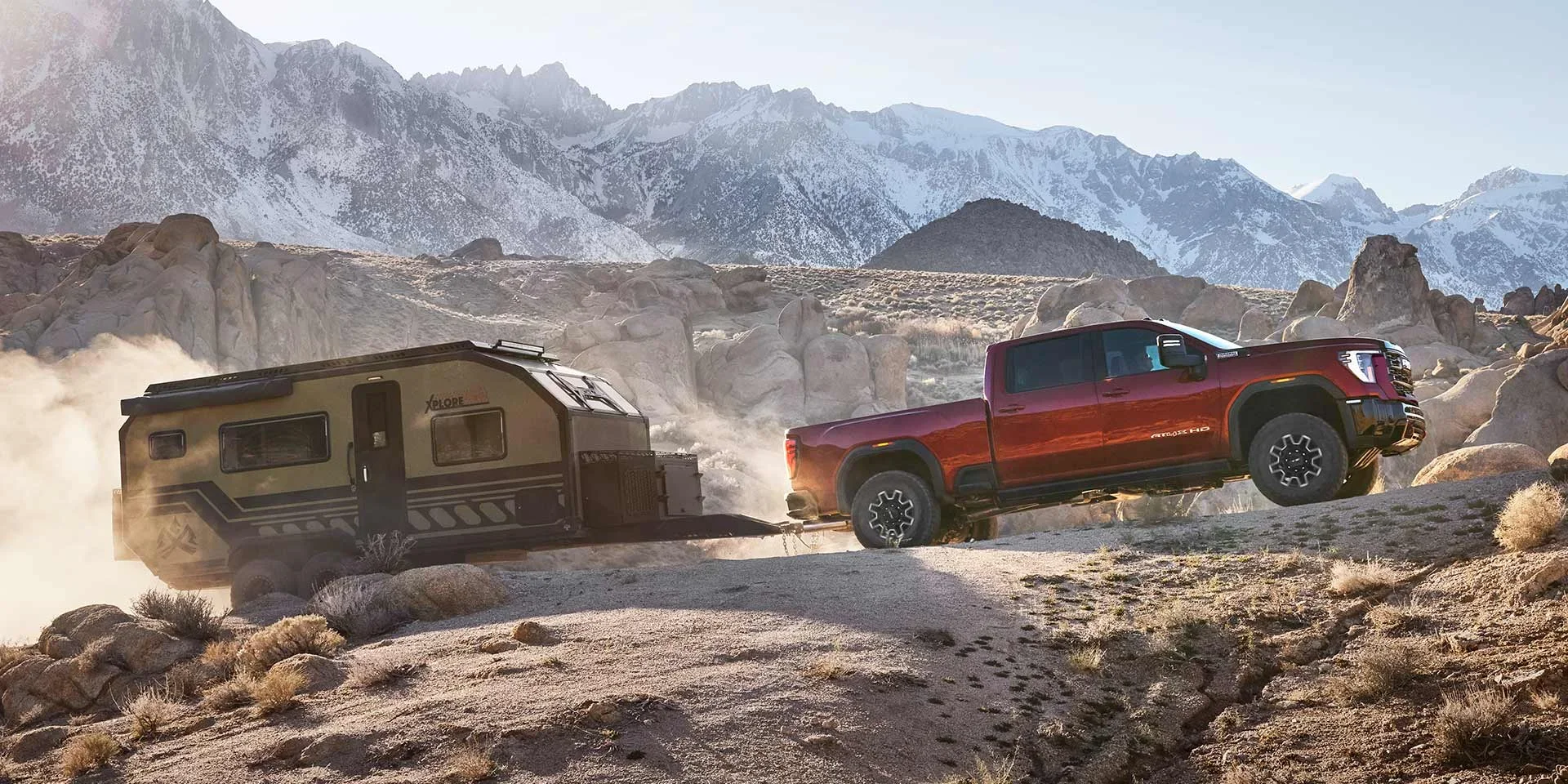
When you tow, some of the trailer’s weight transfers to the truck through the hitch. That downward force is called tongue weight for conventional trailers. A properly loaded bumper-pull trailer often places roughly 10% to 15% of its loaded trailer weight on the hitch, although the correct amount depends on the trailer type and manufacturer guidance.
Say a loaded trailer weighs 6,000 pounds. Its tongue weight could be in the neighborhood of 600 to 900 pounds. That weight counts against payload before you add the driver, passengers, a cooler, recovery gear, or cargo in the bed.
Fifth-wheel and gooseneck trailers typically place a larger share of their weight in the bed, so payload becomes especially critical. A weight-distributing hitch can help level a properly matched truck and trailer and improve handling, but it does not increase the truck’s payload rating. Neither does an aftermarket suspension helper. Those components may address ride height or stability, but the factory-rated limits remain in place.
How to Estimate the Payload You Need
Before comparing trucks, make an honest list of what normally comes along. Avoid using the occasional light-load day as your benchmark. Plan for the heaviest realistic day you expect to have a few times each year.
Consider these common payload items:
- Every regular passenger, including car seats and pet crates
- Tools, job boxes, generators, fuel containers, and bed cargo
- Added accessories such as bed covers, racks, and running boards
- Loaded trailer tongue weight or the pin weight of a fifth-wheel trailer
Then compare your estimate with the number on the truck’s Tire and Loading Information label. Leave breathing room rather than aiming to use every last pound. Cargo changes, passengers join trips, and a trailer can weigh more after it is packed with water, batteries, food, and camping equipment.
For many Sierra 1500 shoppers, a versatile half-ton configuration is an excellent fit for household projects, recreational towing, and everyday driving. A Canyon may suit buyers who need a more maneuverable truck for lighter loads and weekend gear. If your regular workload includes large equipment, a heavy trailer, or a truck camper, a Sierra HD configuration may be the more comfortable match. The answer depends on the actual load, not on what a neighbor drives.
Do Not Forget Tires and Axle Ratings
Payload is a whole-vehicle number, but safe loading also depends on tire and axle limits. Cargo should be secured and distributed according to the owner’s manual. With a trailer attached, confirm that the truck and trailer sit level enough for safe operation, that tires are inflated to the specified pressure for the load, and that no axle rating is exceeded.
A public scale is one of the best tools for frequent towers. Weigh the loaded truck by itself, then weigh the truck and trailer combination as directed by the scale operator. The results can show whether a trailer is transferring more hitch weight than expected or whether bed cargo needs to be rearranged.
This attention to weight is not just about protecting a rating on paper. Overloading can affect steering response, braking distance, tire heat, suspension behavior, and transmission performance. It can turn a normal drive through Huntsville traffic or a long run toward the mountains into a more stressful trip than it should be.
Payload Matters for SUVs, Too
Truck shoppers are not the only people who should pay attention. The same loading principles apply when towing with a GMC Yukon, Acadia, or a Buick Enclave. Passengers, cargo behind the third row, and trailer tongue weight all count toward the vehicle’s available carrying capacity.
That matters for families comparing a truck with an SUV. A Yukon may be a better choice when passenger comfort comes first, while a Sierra may offer the bed space and payload flexibility needed for work materials or larger hitch loads. The best vehicle is the one that handles the full picture: people, cargo, towing needs, parking, and day-to-day driving.
Check the Label Before You Commit
When you visit Bentley Buick GMC, bring details about the trailer, equipment, or cargo you expect to carry. A sales professional can help you locate the door-jamb label on a specific truck and compare configurations without guesswork. If you already own a trailer, knowing its loaded weight and measured tongue weight makes the conversation even more useful.
Payload should give you confidence, not create confusion. Take the time to match the truck to the work and weekends ahead, then browse new and used inventory with the actual load in mind.
Frequently Asked Questions
How do I find the payload rating on a used GMC truck?
Look for the Tire and Loading Information label on the driver side door jamb. It shows the rating for that truck as built. If a previous owner added a lift kit, bigger tires, a toolbox, or a heavy bumper, those items use up part of the payload. Weighing the empty truck shows what capacity actually remains.
Does summer heat change how much I should load my truck?
The rated payload does not change, but hot North Alabama summers put extra stress on tires, brakes, and the transmission when a truck is loaded. Set tire pressure to the load specification while the tires are cold, avoid running right at the limit, and keep fluids and brake service current before towing season.
Where can I weigh my truck and trailer near Huntsville?
Certified public scales are common at truck stops along interstate routes such as I-65, and some local businesses that handle bulk materials also offer weighing. Weigh the truck alone, then with the trailer attached, and follow the scale operator's directions. The results show your real payload and tongue weight instead of an estimate.
Does a Sierra HD make sense for a slide-in truck camper?
Slide-in campers place a lot of weight in the bed, so payload is often the deciding number. Many camper owners look at heavy-duty trucks for that reason. Check the camper's loaded weight against the door jamb label on the specific truck, and leave room for passengers, water, and gear.