



Welcome to WordPress. This is your first post. Edit or delete it, then start writing!
GMC Yukon vs. Yukon XL: Which Size Fits Your Family?
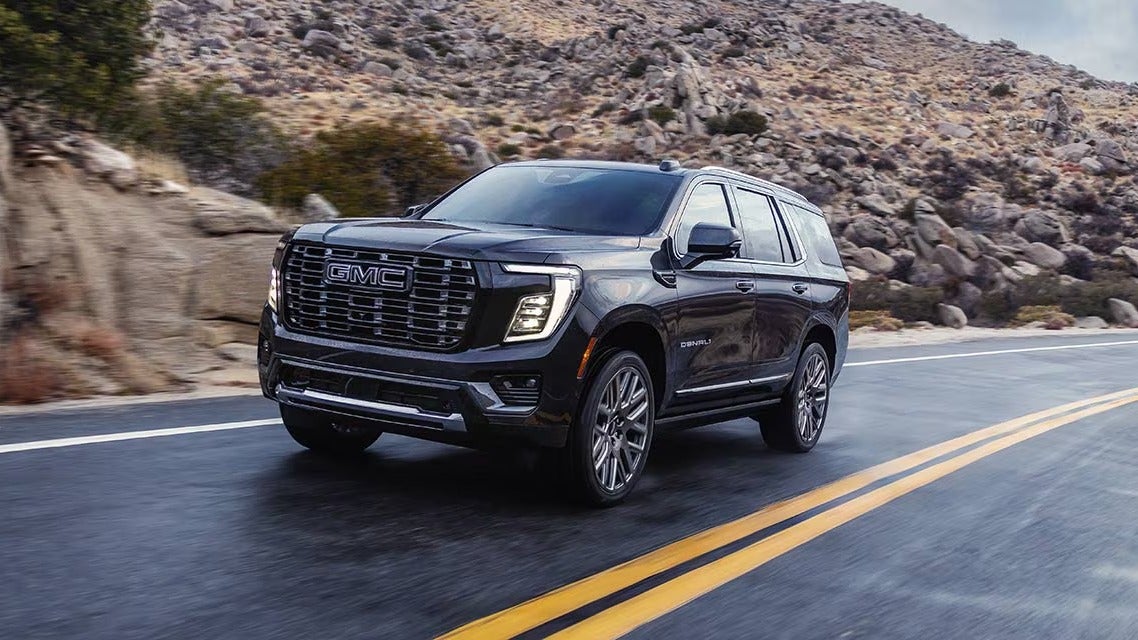
Shopping for a full-size SUV usually comes down to one question: how much room do you really need? The GMC Yukon vs. Yukon XL decision is a good example, because the two share the same engines, trims and technology. The difference is length, and that length changes how you use the third row and the cargo area every day. At Bentley Buick GMC, we walk Huntsville families through this choice all the time, so here is a clear look at where each size fits. The Yukon Denali. Image: GMC What the Yukon and Yukon XL Share You are not giving anything up by choosing either size. GMC builds both on the same platform and offers the same five trims on each: Elevation, AT4, AT4 Ultimate, Denali and Denali Ultimate. Both seat up to eight passengers, with the AT4 Ultimate configured for seven, and both stand 76.5 inches tall. The engine lineup is identical too: 5.3L V8: the standard engine, rated at 355 horsepower and 383 lb-ft of torque. 6.2L V8: 420 horsepower and 460 lb-ft of torque for stronger acceleration. 3.0L Duramax turbo-diesel: 305 horsepower and 495 lb-ft of torque, the most torque in the lineup. Every engine pairs with a 10-speed automatic transmission. If you want to see how the trims stack up, our Yukon and Yukon XL research page lays out the features of each one. Size and Cargo: Where the Yukon XL Pulls Ahead The Yukon XL is about 15 inches longer than the standard Yukon, at 225.2 inches compared with 210.1 inches. Most of that length goes into the wheelbase, which grows from about 121 inches to about 134 inches, and into the cargo area behind the third row. Measurement Yukon Yukon XL Overall length 210.1 in 225.2 in Wheelbase About 121 in About 134 in Cargo behind 3rd row 25.5 cu ft 41.5 cu ft Cargo behind 2nd row 72.5 cu ft 93.6 cu ft Maximum cargo 122.8 cu ft 144.5 cu ft Seating Up to 8 Up to 8 The figure that matters most for many families is cargo behind the third row. With every seat in use, the Yukon XL gives you 16 more cubic feet. That is the difference between squeezing in a few duffel bags and fitting strollers, sports gear and a week of groceries at once. GMC also notes that the XL adds third-row legroom, so adults in the way back ride more comfortably on long road trips. If that sounds like your household, take a look at our new Yukon XL inventory to see which trims and colors are on the lot. Where the Standard Yukon Makes More Sense Easier to park and garage At 210.1 inches, the standard Yukon is easier to live with in tight spaces. Those 15 inches matter in a parking deck or a compact home garage. Measure your garage before you shop: the Yukon XL is about 18 feet 9 inches long, so make sure you will still have room to walk around it. A little more towing capacity GMC rates the Yukon to tow up to 8,400 lbs when properly equipped. The Yukon XL is rated slightly lower because it carries more weight. For most boats and campers the gap is small, but if you tow close to the limit, the standard Yukon gives you a bit more margin. A third row you use now and then If your third row is mostly for carpool runs or visiting family, the standard Yukon still offers 25.5 cubic feet behind it, and folding the third row opens up 72.5 cubic feet. You can compare what is available in our new Yukon inventory. Both sizes share the same trims and engines. Image: GMC Which Size Is Right for You? Choose the Yukon if you: Park in tight spaces or have a shorter garage Tow often and want the highest rating Use the third row occasionally Choose the Yukon XL if you: Fill all three rows on a regular basis Need real cargo room behind the third row Have adults or teens riding in the back on long trips It also helps to think a few years ahead. A family that fits in the standard Yukon today may need the extra third-row room once kids grow into teenagers or start bringing friends along. On the other hand, if your schedule is mostly commuting and errands, the shorter Yukon is the one you will be glad to park every day. Many drivers from Madison, Decatur and Athens bring their own gear to the test drive: car seats, a cooler or a set of golf clubs. Loading it into both sizes back to back is the fastest way to decide. Once you know which size fits, our finance team can walk you through options on either model. Frequently Asked Questions What is the difference between the GMC Yukon and Yukon XL? The Yukon XL is about 15 inches longer, with a longer wheelbase, more third-row legroom and more cargo space. Both share the same engines, the same five trims and seating for up to eight. How much more cargo space does the Yukon XL have? Behind the third row, the Yukon XL offers 41.5 cubic feet compared with 25.5 cubic feet in the Yukon. With the rear seats folded, maximum cargo grows from 122.8 to 144.5 cubic feet. Can the Yukon XL tow as much as the Yukon? Nearly. GMC rates the Yukon at up to 8,400 lbs when properly equipped, and the XL is rated slightly lower because of its added weight. Exact ratings depend on the engine, drivetrain and trailering package. Will a Yukon XL fit in my garage? The Yukon XL is 225.2 inches long, or about 18 feet 9 inches. Measure your garage depth and leave room to walk around the vehicle before you decide. Can I test drive both the Yukon and Yukon XL at Bentley Buick GMC? Yes. Visit us at 2120 Drake Ave SW in Huntsville or call 256-536-2475, and we can have both sizes ready so you can compare them side by side. Find Your Yukon at Bentley Buick GMC The GMC Yukon vs. Yukon XL choice comes down to how you use the space behind the second row. If you want a full-size SUV that parks easily and tows a little more, the Yukon is the pick. If you fill every seat and still need room for gear, the XL earns its extra length. Get a trade appraisal online, then stop by Bentley Buick GMC on Drake Ave SW in Huntsville to sit in both.

Chevrolet Silverado vs. GMC Sierra: What's the Difference?
Chevro let Silverado vs. GMC Sierra: What's the Difference? It is the most common truck question we get in the Shoals, and it deserves a real answer instead of a sales pitch. The Chevrolet Silverado 1500 and the GMC Sierra 1500 are built by General Motors on the same platform, with the same engines and the same capability. They are, mechanically, the same truck. The Bentley Auto Group sells both Chevrolet and GMC here in Florence, so we have no reason to talk you out of either one. What follows is simply how the two actually differ, and how to figure out which one belongs in your driveway. What The Two Trucks Share Start here, because it is most of the story: Four identical engines. The 2.7L TurboMax (310 hp, 430 lb-ft), the 5.3L EcoTec3 V8 (355 hp, 383 lb-ft), the 6.2L EcoTec3 V8 (420 hp, 460 lb-ft), and the 3.0L Duramax turbo-diesel (305 hp, 495 lb-ft) The same transmissions and four-wheel-drive systems The same cab and bed combinations The same maximum tow rating, 13,300 pounds when properly equipped Nearly identical payload, 2,260 pounds for the Silverado and 2,230 for the Sierra If your question is "which one can pull my boat to Wilson Lake," the answer is both, identically. Capability is not the deciding factor. Difference 1: Price And Value Positioning The 2026 Silverado 1500 starts at $36,900 MSRP. The Sierra 1500 starts at $38,300. Chevrolet is priced as the value play throughout the lineup, and that holds trim for trim on comparably equipped trucks. This is the clearest practical difference. If two trucks tow the same, haul the same, and use the same engine, the lower price is doing real work for you. Difference 2: How The Trims Are Laid Out Chevrolet offers nine Silverado trims, GMC offers eight Sierra trims, and they emphasize different things. Silverado runs Work Truck, Custom, Custom Trail Boss, LT, RST, LT Trail Boss, LTZ, ZR2, and High Country. The lineup is built around work and off-road value, with Trail Boss and ZR2 giving you factory lift and off-road hardware without a luxury payment. Sierra runs Pro, SLE, Elevation, SLT, AT4, AT4X, Denali, and Denali Ultimate. The lineup leans premium, with AT4 and AT4X handling off-road and Denali sitting at the top. The practical upshot: it is generally easier to get a well-equipped Silverado at a lower price point, and easier to get a genuinely luxurious Sierra at the high end. Difference 3: Interior and Materials The Sierra's Denali and Denali Ultimate trims are the nicest interiors GM puts in a half-ton, and that is not a small thing if your truck is also your daily driver and your road-trip vehicle. More leather, more wood, more quiet. The Silverado's High Country is a very nice truck too, and closer than the badge gap suggests. But if maximum interior richness is what you are after, GMC is where it lives. Difference 4: Tailgates Both offer a six-function tailgate that does the same set of tricks: load stop for long material, second-tier loading, standing workstation, and step access into the bed. Chevrolet calls it Multi-Flex, GMC calls it MultiPro. For 2026, GMC reduced MultiPro availability across parts of the Sierra lineup, so check the specific truck rather than assuming it is included. Difference 5: Styling This one is entirely yours to judge. The Silverado's front end is broader and more traditionally truck-like. The Sierra's is squarer and more upright, with a heavier chrome or body-color treatment depending on trim. Neither is objectively better and no spec sheet will settle it. Stand in front of both. How To Decide Lean Silverado if you want the most capability for the money, you want a work-focused or off-road trim without a premium payment, or you plan to actually use the bed on Highway 72 and around Muscle Shoals job sites. Lean Sierra if the interior is the deciding factor, you want Denali-level finish, and the price difference is not a concern. Either way, get the engine matched to your real towing. The 2.7L TurboMax is plenty for most people and returns the best payload. The 5.3L V8 is the sweet spot for regular towing. The 6.2L V8 is for maximum power, and the Duramax diesel is for high-mileage towing where fuel economy matters. Shop Now The fastest way to settle this is to sit in them. Browse our current new Silverado 1500 inventory, see the full new Chevrolet lineup, or shop pre-owned trucks if you want to stretch the budget. You can apply for financing online before you arrive, get a number on your current truck with our trade appraisal, and schedule service with our team once it is yours. Bentley Chevrolet of Florence 1950 Florence Blvd, Florence, AL 35630 256-587-2136 Contact us and we will walk you through both trucks. MSRP excludes destination, taxes, title, registration, and dealer fees. Towing and payload figures require proper equipment and vary by cab, bed, and drivetrain configuration. Specifications subject to change.
gmc-acadia-vs-chevy-traverse
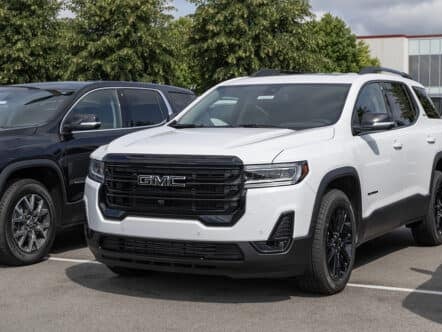
Comfort When comparing the Chevy Traverse vs. the GMC Acadia for comfort, both models offer a range of amenities, but not all of them are standard. These two models allow you to upgrade to power eight-way front seats with memory and lumbar support. They also offer a power sunroof as an additional feature. Stay connected with either SUV featuring wireless Apple CarPlay and Android Auto standard, along with a touchscreen and navigation. You’ll also get a premium Bose audio system with eight speakers for the GMC and ten speakers for the Chevy model. Chevy also offers three sizes for the driver information center compared to two for GMC. However, the Acadia’s options are the same size as the two larger choices for the Traverse. Reliability Reliability ratings depend on which model year you’re looking at for the Chevy Traverse vs. GMC Acadia. However, for the 2023 model year, the Traverse is going to be difficult to beat as it ranks #3 out of 23 for US News & World Report. JD Power gave it an 83 out of 100. While US News ranked the Acadia significantly lower, the model received a higher score from JD Power at 85. Both models come with a three-year/36,000-mile warranty and a powertrain warranty for five years or 60,000 miles. Cost Cost can often be a deciding factor in purchasing a vehicle. GMC and Chevy are competitive with their two three-row SUVs, with the Traverse coming in slightly lower for its base model. Acadia offers a comparable price of just about $2,000 more. If you decide to upgrade to the top tier trim with AWD, you’re going to see about a $1000 price difference going to Acadia as the more expensive. Its Denali trim comes in at around $53,800 compared to the High Country trim of the Traverse at $52,800. In the end, both the 2023 GMC Acadia and Chevy Traverse are competitive vehicles with minimal price differences. Interior and Exterior Dimensions When it comes to room in the cabin, a three-row SUV serves two purposes. First, it needs to have plenty of passenger space. The Chevy Traverse offers a maximum 158.3 cubic feet of passenger space, while the GMC Acadia is at 135.3 cubic feet. Both models are at the exact same dimensions for front-seat legroom at 41 inches. The Traverse has more room in the third row for taller passengers, beating out the Acadia by a little over two inches. For the second row, the Acadia offers three inches more than the Traverse. The second concern in an SUV is the cargo room. Here is where the Chevy Traverse comes out ahead with over twice the amount of cargo space behind the third row at 23 cubic feet. When the second and third rows are folded, that amount increases to just over 98 cubic feet compared to the 79 inches of the Acadia. Exterior size may not be quite as important as the interior in the Chevy Traverse vs GMC Acadia, but it does impact handling and turning. The Traverse offers a slightly longer wheelbase at 205.9 inches over the 193.4 inches of the GMC model. Only a difference of three inches in width has the Traverse ahead. Horsepower Horsepower is another factor when deciding on the right three-row SUV. The amount of power in the engine will dictate how large of a trailer or SUV you can tow. The Chevy Traverse offers one engine, which is the 3.6L V6 engine for 310 horsepower. With the GMC Acadia, you get the choice of two engines. First is the 2.0L four-cylinder engine, which provides up to 228 horsepower. You can upgrade to the 3.6L V6 engine for 310 horses under the hood. Powertrain Both the Chevy Traverse and GMC Acadia offer all-wheel drive, with front-wheel drive being standard. Each model pairs its engines with a nine-speed automatic transmission. When it comes to fuel economy, the GMC Acadia wins for city driving with up to 22 mpg over the 18 mpg of the Traverse. On the highway, the numbers are significantly higher for both models, with the Acadia in the lead again with up to 29 mpg. The Traverse offers a respectable 27 mpg on the highway as well. Utility For towing capacity, the Traverse beats out the Acadia by 1000 pounds with it pulling up to 5000 pounds when properly equipped. On the other hand, the GMC SUV provides a smoother ride with enhanced agility. The Bottom Line When it comes to choosing a quality SUV with the GMC Acadia vs. Chevy Traverse, you can’t go wrong with either option. The final decision comes down to individual tastes and needs and the features that are most important to you. Take both of them for a test drive to see which is right for you and your family. Visit Bentley Buick GMC to learn more about the GMC Acadia. Let us help you select the three-row SUV that fits your active lifestyle.